

How Humidity Affects Wood Staining Results in Baton Rouge
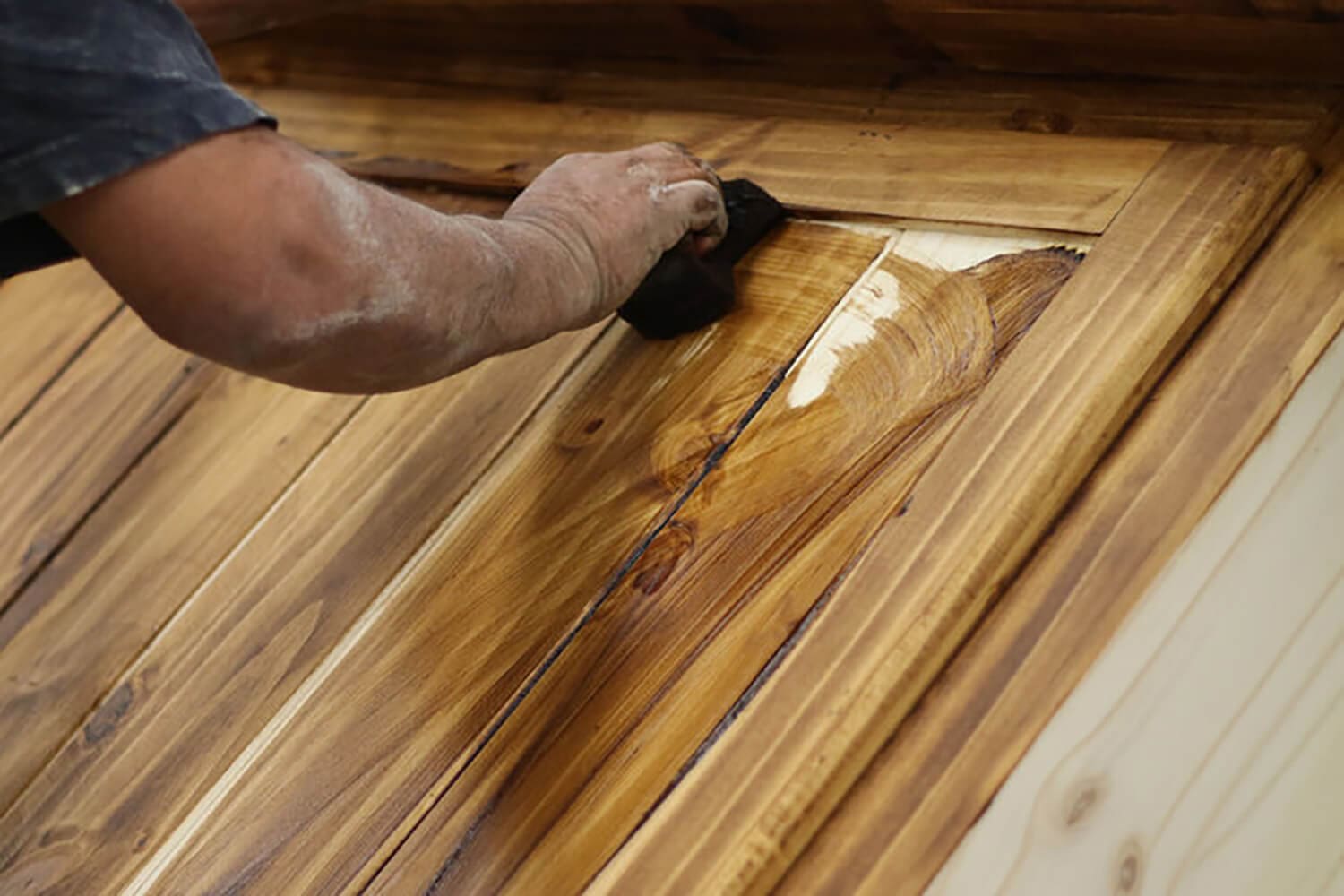
Baton Rouge homeowners don’t usually think about humidity when they decide to have wood features stained. They think about color, finish, and timing in the sense of scheduling — when they can get someone out to the house. What they don’t think about is whether the air itself will allow the stain to do its job.
In Louisiana, that’s a problem. The humidity levels that define the climate here aren’t just uncomfortable — they actively interfere with how wood stain penetrates, dries, and cures. A stain job applied in the wrong conditions can look fine for a few weeks and fall apart within a season. Understanding how humidity affects wood staining in Baton Rouge is the first step toward understanding why this work requires a professional who knows how to read those conditions and plan around them.
This blog covers what humidity does to wood before a stain is ever applied, what goes wrong when conditions aren’t accounted for, how Baton Rouge’s seasonal patterns create better and worse windows for staining work, and how a professional manages all of it.
What Humidity Does to Wood Before the Stain Is Applied
Wood is a porous material. It absorbs what surrounds it, and in a climate like Baton Rouge’s, what surrounds it is almost always moisture-laden air. When relative humidity is high, wood draws that moisture into its pores. Those pores don’t stay open and waiting for stain — they fill with whatever is available, and in Louisiana, that’s often water vapor.
Stain works by penetrating into the wood fiber. The bond between stain and wood happens at the pore level. When moisture is already occupying that space, the stain has nowhere to go. It sits on the surface rather than soaking in, which means the bond it forms is shallow at best and nonexistent at worst.
Drying and curing are a separate problem. Even if stain is applied and appears to penetrate, humid air slows evaporation significantly. A finish that looks dry to the touch may still be curing underneath. When that process is interrupted or slowed by surrounding moisture, the result is a finish that never fully hardens the way it should.
It’s worth noting that humidity affects different stain types in different ways:
- Water-based stains are more sensitive to high humidity during application because they rely on water evaporation to cure — when the air is already saturated, that evaporation stalls
- Oil-based stains tolerate slightly more humidity during application but are still vulnerable during the curing window, particularly if temperatures drop or humidity spikes overnight
Neither formula is immune. The conditions matter regardless of what’s in the can.
What Happens When Wood Stain Is Applied in the Wrong Conditions
Humidity doesn’t just slow down a stain job. When conditions are wrong and work proceeds anyway, the results are visible, permanent, and expensive to correct. These aren’t occasional outcomes — they’re predictable consequences of applying stain when the wood and the air aren’t ready for it.
Clouding and Milky Discoloration
When moisture gets trapped under or within the stain film during application or drying, it shows up on the surface as a cloudy, hazy, or milky discoloration. The finish looks damaged because it is. The moisture interference happened during the curing process, and the result is locked into the finish.
There is no fix short of stripping the surface back to bare wood and starting over. No additional coat corrects it. No buffing removes it. The only path forward is removal.
Uneven Color and Blotching
High humidity causes stain to absorb inconsistently across a wood surface. Some areas take more stain, others resist it, and the result is a patchy, blotchy appearance with visible variation in color depth. On a front door or a set of exterior columns, this is immediately noticeable.
Once the stain dries, the unevenness is permanent. It cannot be touched up or blended. Full removal is the only way to correct it.
Poor Adhesion and Premature Failure
When stain cannot bond to a moisture-saturated surface, it forms a weak connection at best. It sits on top of the wood rather than within it. That surface-level finish will begin to flake and peel well before a properly applied job would show any signs of wear.
What makes this particularly frustrating is that the problem isn’t always visible at first. A job can look acceptable for a few weeks and still be compromised underneath. The bond that should have formed never did, and as the finish is exposed to Baton Rouge’s heat and humidity cycles, it breaks down from within. A stain job applied in poor conditions may fail within a single season regardless of how it looked on the day it was completed.
How Baton Rouge’s Humidity Patterns Affect the Timing of Staining Work
Baton Rouge doesn’t have a humidity problem a few months out of the year. It has a humidity problem most of the year, with some windows that are better than others. Knowing those windows is a core part of planning any wood staining project here.
The general pattern breaks down like this:
- Summer (June through September) is the most difficult window. Heat and humidity peak together, with relative humidity regularly above 80 percent. Proper curing is difficult on most days during this stretch.
- Spring and fall offer more workable conditions but aren’t uniformly reliable. A dry week can shift quickly, and overnight humidity can compromise work done during the day.
- Winter is typically the most stable season for exterior staining in Baton Rouge. Lower humidity and cooler temperatures give stain the best chance to penetrate and cure consistently.
Timing also extends beyond the day of application. The wood’s moisture content going in is shaped by the days before. The cure depends on the days after. A professional isn’t just checking conditions the morning work begins — they’re evaluating a window that spans the full sequence.
In Baton Rouge, finding that window takes more than a good forecast. It takes knowing what qualifying conditions actually look like and being willing to wait for them.
How a Professional Manages Humidity When Planning a Staining Project
Humidity doesn’t cancel a staining project — but it does determine how a professional plans one. The difference between a finish that holds and one that fails often comes down to the decisions made before a brush ever touches the wood.
Condition assessment comes first. Before committing to a start date, a professional checks relative humidity, dew point, surface temperature, and the wood’s moisture content. A single reading on a single morning isn’t enough. Conditions shift, and a project that looks viable at 8 a.m. may not be by midday. The assessment is ongoing, not a one-time checkbox.
Product selection follows from those conditions. Stain formulas vary in how much humidity they can tolerate during application and curing. A professional selects a product suited to the conditions expected throughout the project window, not just what’s on hand or what was used on the last job.
Scheduling is where all of it comes together. A professional approach to scheduling includes:
- Identifying a qualifying window based on current and forecasted conditions, not just calendar availability
- Building in flexibility to shift the start date if conditions change
- Accounting for the days after application, when curing is still happening and humidity remains a factor
Rescheduling when conditions aren’t right isn’t a setback. Starting in the wrong conditions and having to strip and redo the work is. That distinction is what professional judgment looks like in practice, and it’s what separates a wood staining result that lasts from one that fails within a season.
Talk to a Professional About the Right Timing for Your Wood Staining Project
Humidity is the variable that determines whether a wood staining job holds up or breaks down early. In Baton Rouge, it’s present in some form on almost every project — which means it has to be managed on every project. The finish that cures correctly and lasts is the one applied by someone who understands what conditions are required and how to find them in this climate.
That’s not a reason to put the project off indefinitely. It’s a reason to approach it the right way. A professional can assess your specific wood features, evaluate what conditions they require, and give you an honest picture of when the timing makes sense for your home.
Prestigious Painting offers professional wood staining services in Baton Rouge for exterior columns, doors, trim, and other wood features — scheduled and applied with the conditions in mind so the finish holds the way it should.
Contact us today to talk through your project and find the right window to get it done.