Signs Your Baton Rouge Home Needs Exterior Repainting
Something looks off about your home’s exterior. Maybe a wall looks duller than it used to. Maybe you’ve noticed paint lifting at the trim, or a dark streak that won’t wash off. You’re not sure if it’s a real problem or just normal wear.
In Baton Rouge, it’s usually a real problem. The signs of exterior paint failure here start subtly. They’re easy to dismiss as cosmetic. But by the time they’re obvious, the surface underneath is often already compromised. Recognizing the signs your home needs exterior repainting early is the difference between a straightforward repaint and a project that includes wood repair, substrate treatment, or both.
This blog walks through each sign you can identify on your own home, what it means structurally, and why acting now matters more than waiting.
Why Baton Rouge’s Climate Is Hard on Exterior Paint
Baton Rouge doesn’t have one climate problem — it has several working together year-round.
UV intensity is the first. Louisiana’s sun exposure is intense and sustained. UV radiation breaks down paint pigments and the binder that holds the film together. That process happens faster here than in cooler or cloudier climates.
Humidity is the second. Sustained high humidity means the substrate rarely gets fully dry. Wood expands and contracts with moisture content. That movement stresses the paint film from beneath. Moisture that finds its way behind the film through cracks or failed caulk has nowhere to escape — it drives adhesion failure from the inside out.
Heat cycling is the third. Daily and seasonal temperature swings cause paint to expand and contract repeatedly. Over time, that fatigue leads to cracking and peeling. South- and west-facing surfaces absorb the most heat and tend to fail first.
Storm activity compounds all of it. Heavy rain, wind-driven debris, and the moisture load that follows a major storm accelerate every other type of deterioration. A surface that was marginal before storm season often shows visible failure after it.
Paint timelines that apply in drier or milder climates do not apply here. A Baton Rouge homeowner should expect exterior paint to show signs of wear sooner than the manufacturer’s rated lifespan suggests.
Fading and Uneven Color
Fading shows up on south- and west-facing walls first. A wall that once had a rich, consistent color now looks washed out, patchy, or dull compared to shaded sections of the same home.
UV radiation breaks down the pigment in the paint and weakens the binder that holds the film together. Fading is a visible indicator that the paint’s protective properties are degrading — not just its color. The film has lost integrity before most homeowners notice the color change.
By the time fading is obvious, the paint has already lost meaningful protective capacity. A faded film is more permeable to moisture. That permeability is what sets up the more serious failures that follow.
Chalking on Exterior Walls
Run your hand across an exterior wall. If it comes away with a powdery white or colored residue, the paint film is chalking. That powder is the paint releasing its pigment and binder as the resin breaks down from UV exposure.
A small amount of chalking on older paint is normal. Heavy chalking that coats the hand quickly signals something more significant — the film has degraded enough that it no longer protects the surface beneath it.
Chalking also creates a practical problem for repainting. A heavily chalked surface cannot simply receive a new coat of paint. The powdery residue prevents new paint from bonding correctly. Proper surface preparation is required before any repaint can hold — and what that preparation involves depends on how far the chalking has progressed. A professional assessment determines the extent and what’s needed before painting begins.
Peeling, Cracking, and Flaking
Peeling and cracking show up first at stress points: trim edges, window and door surrounds, and south-facing walls. The progression looks like this:
- Hairline cracks appear in the film as it loses flexibility
- Edges begin lifting away from the surface at corners and seams
- Sections of paint separate and fall away, exposing what’s beneath
The paint film has lost adhesion to the substrate. In Baton Rouge, the primary drivers are moisture working behind the film through cracks or failed caulk, and the repeated expansion and contraction of the substrate under heat cycling.
Peeling is not a cosmetic issue. Once the film breaks, moisture has direct access to the substrate. Wood absorbs that moisture, softens, and deteriorates from the inside. What looks like a paint problem on the surface is often the beginning of a substrate problem underneath.
Peeling caught early means a proper prep and repaint. Peeling left to progress may mean wood repair or replacement before repainting is even possible. The cost difference between acting early and acting late is significant.
Bubbling and Blistering
Bubbling appears as raised, dome-shaped areas in the paint film. They may feel soft or firm to the touch. They tend to cluster near windows, soffits, and areas of the home with limited airflow.
Moisture trapped beneath the film causes bubbling. In Baton Rouge’s climate, the sources include:
- Water vapor moving from inside the home through walls to the exterior
- Moisture entering through existing cracks in the film
- Direct water contact on a surface that wasn’t fully dry at application
Painting over bubbling without identifying and correcting the moisture source produces the same result again. The new paint bubbles for the same reason the old paint did. Bubbling is a symptom. The source driving it must be found and addressed as part of the repaint process.
Bubbled areas that rupture expose the substrate directly to moisture. In Baton Rouge’s climate, that exposure accelerates deterioration fast. A surface showing active bubbling needs attention before the next storm season.
Caulk Failure Around Windows, Doors, and Trim
Caulk failure looks like dried-out, cracked, or shrunken sealant that has separated from one side of the joint. Gaps appear at the seam between window or door frames and the surrounding siding or trim. They’re often small enough to overlook on a casual inspection.
Caulk and paint work as a system. Caulk seals the joints that paint cannot bridge. When caulk fails, it opens a direct path for moisture to enter behind the siding and paint film. Baton Rouge’s heat cycling causes caulk to expand and contract repeatedly, which accelerates the hardening and cracking process. Sustained humidity keeps joints in a near-constant state of moisture exposure. Caulk fails faster here than in drier climates.
Moisture entering through failed caulk works directly into the substrate at those entry points. Wood at window sills, door frames, and trim members absorbs that moisture and begins deteriorating exactly where the caulk failure is visible. Failed caulk is addressed as part of a professional exterior repaint. It is not a separate maintenance task — it is an integrated part of restoring the exterior’s protective system.
Mildew and Algae Staining
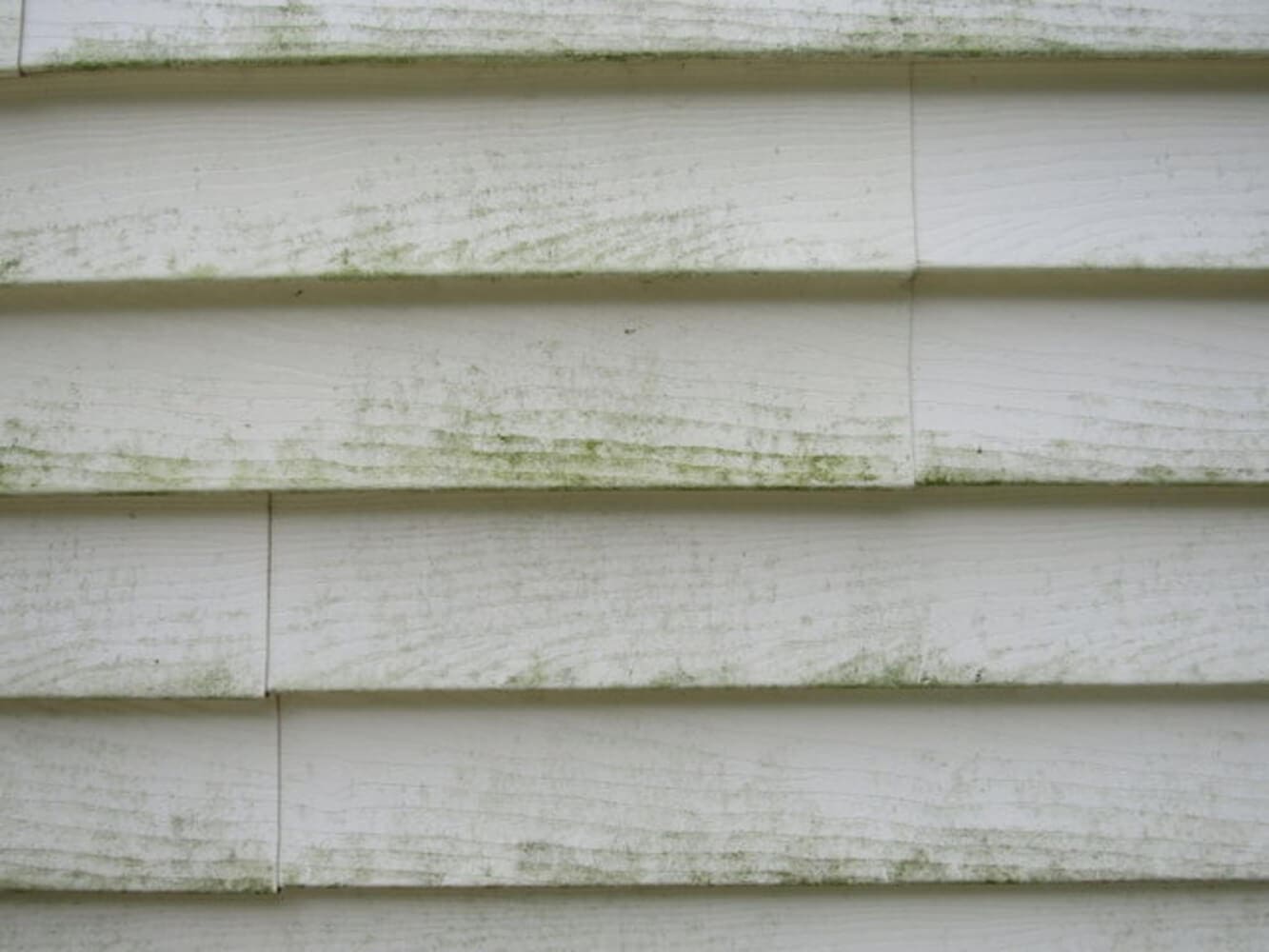
Dark streaks, black or gray patches, and green growth on exterior walls are the visible face of a moisture problem. They appear most often on shaded sides of the home, under soffits, near downspouts, and in areas where moisture lingers after rain.
Surface dirt washes off. Mildew and algae staining that returns after cleaning, or that won’t come off with pressure washing, indicates that moisture conditions at the surface actively support biological growth. The staining is a symptom of a moisture problem — not just an appearance problem.
Baton Rouge’s sustained humidity, warm temperatures, and limited airflow on shaded surfaces create near-ideal conditions for mildew and algae growth. Homes here see this sign appear sooner and more aggressively than homes in drier regions.
Painting over mildew and algae without proper treatment produces the same staining through the new coat. A professional exterior repaint addresses the biological growth at the surface before any new coating goes on.
Bare Substrate Exposure
Bare substrate exposure is the most urgent sign on this list. It means raw wood, fiber cement, or stucco is visible through the paint film. The protective layer has worn completely away or peeled back to the underlying material.
Bare substrate has no protection from moisture, UV, or biological growth. Every day it stays exposed in Baton Rouge’s climate, deterioration accelerates. Here’s what that looks like for each material:
- Wood absorbs moisture rapidly in a humid climate. It softens and can develop rot within a single storm season if left unaddressed
- Fiber cement becomes vulnerable to moisture absorption at cut edges and fastener points once the paint coating is gone
- Stucco becomes more permeable to moisture and more susceptible to surface cracking without its paint layer
Bare substrate exposure is not simply a repaint situation. A professional needs to assess whether the substrate has already sustained damage and whether repairs are necessary before repainting. If you’re wondering whether repainting over the existing surface is feasible, the answer depends entirely on what the substrate looks like underneath. Acting immediately keeps it a repaint. Waiting turns it into a repair-plus-repaint project.
Fall Is the Right Time to Act on These Signs in Baton Rouge
Baton Rouge’s summers push conditions outside the range where exterior paint can be applied and cured correctly on many days. Sustained heat and humidity are the problem. Paint needs to penetrate, bond, and cure within a specific temperature and humidity range — summer in Baton Rouge frequently falls outside it.
Fall changes that. As temperatures moderate and humidity drops in September and October, the conditions that make summer painting difficult begin to ease. Paint can penetrate, bond, and cure more consistently during this window than at any other point in the year. Prestigious Painting’s own team has noted that early fall is the best time of year to paint in Baton Rouge — cooler days, lower humidity, and stable conditions make it the most reliable window for exterior work.
A homeowner who recognizes these signs now is in the right position to act. Scheduling an assessment in September means the project can be planned and executed during the best exterior painting conditions Baton Rouge offers.
The consequence of waiting is real. A home with active paint failure going into another summer faces another full season of UV exposure, heat cycling, and storm activity on a surface that’s already compromised. The damage manageable now may require more extensive repairs by the time conditions become favorable again.
Schedule an Exterior Assessment Before the Signs Get Worse
These signs do not resolve on their own. Fading continues. Peeling spreads. Moisture working behind failed caulk or bubbled film keeps deteriorating the surface. The longer these signs go unaddressed, the more the damage compounds underneath.
The next step is a professional assessment. A professional can evaluate what’s driving each sign, determine which areas indicate cosmetic wear versus active failure, and walk you through what the project will involve before the damage progresses further.
Prestigious Painting provides exterior painting services in Baton Rouge for residential homes across East Baton Rouge, Ascension, and Livingston parishes. Contact us today to schedule your exterior assessment and find out what your home needs before another season passes.